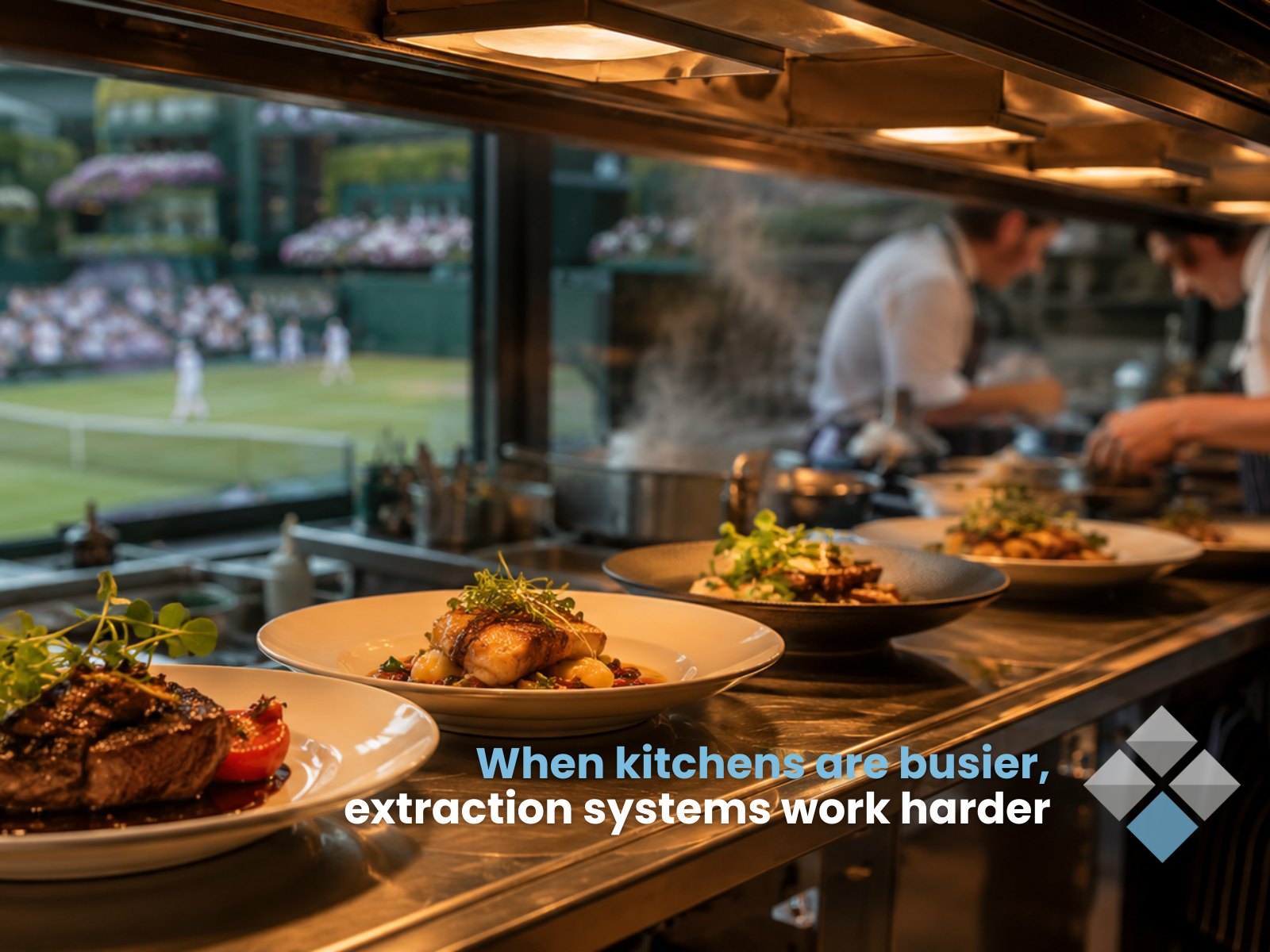
Summer is good news for hospitality. Big screens go up, beer gardens fill, walk-ins increase and kitchens are asked to keep pace with a different kind of pressure.
Wimbledon, the World Cup, concerts, local festivals and warm-weather trade all have the same operational effect: longer service, heavier prep, more frying and grilling, more late finishes, and less time between shifts to reset properly.
That extra demand does not only show up in the till. It also shows up in the canopy, filters, ductwork, fans, floors, walls and hard-to-reach areas behind the line.
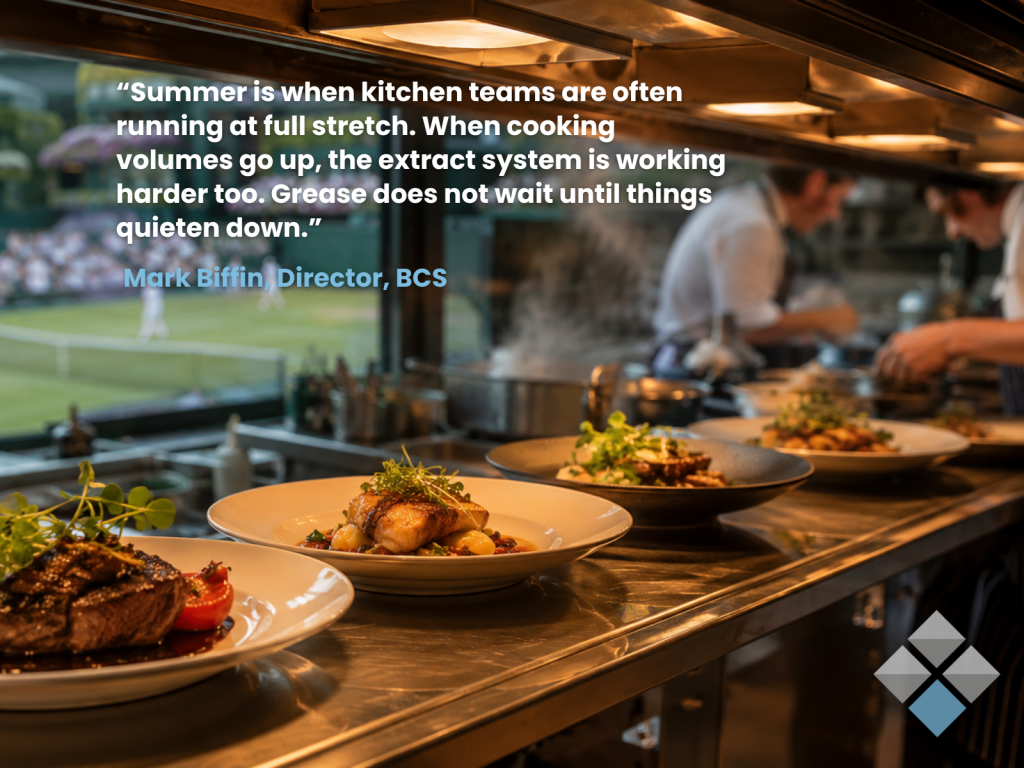
“Summer is when kitchen teams are often running at full stretch. When cooking volumes go up, the extract system is working harder too. Grease does not wait until things quieten down.”
Mark Biffin, Director, BCS
Busy kitchens create faster build-up
During a normal week, a commercial kitchen already produces grease, steam, smoke, odours and airborne particles. During a run of major events, that load can increase quickly.
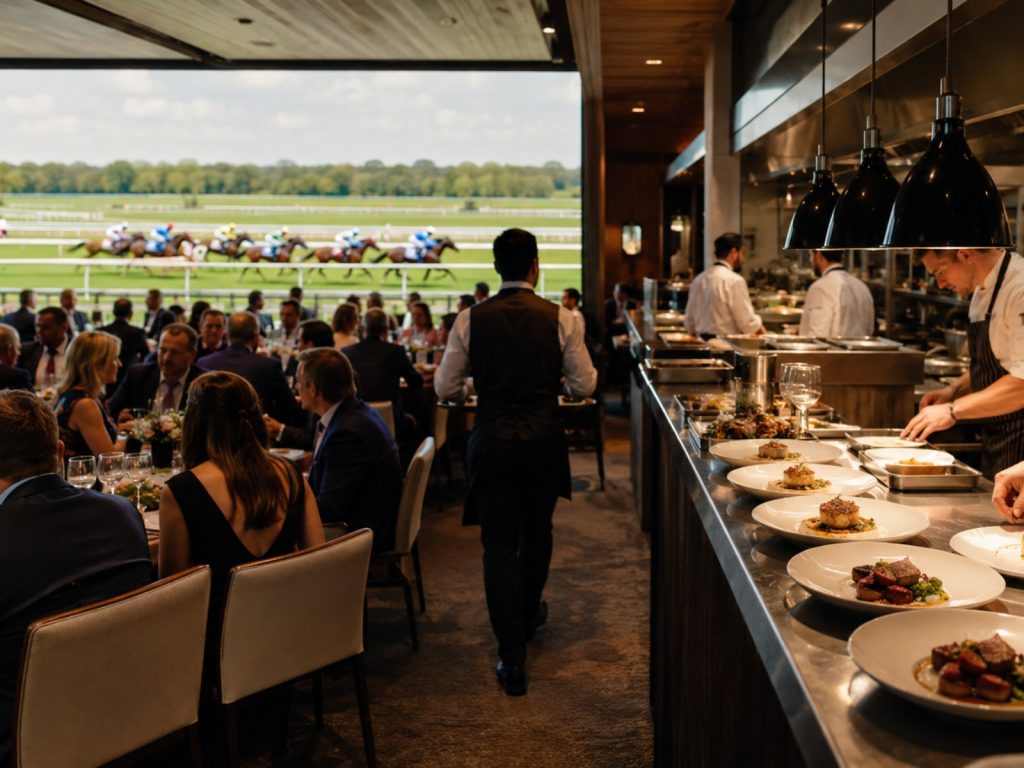
For pubs, restaurants, hotels, stadium sites, food halls and casual dining venues, the pressure often comes from a mix of booked tables and unpredictable walk-ins. A football fixture can mean a rush before kick-off, a second rush at half-time, and another push after the final whistle. Wimbledon can bring long afternoon trade, outdoor seating, snacks, drinks and food running throughout the day.
When kitchens are busier, extract systems have more to deal with. Filters can become loaded faster. Canopies can become sticky. Grease can travel further into ductwork. Fans and access points can be missed if cleaning is squeezed into a short end-of-night window.
That is why summer is not the time to let planned cleaning drift. It is the time to check that the cleaning frequency still matches the kitchen’s actual use.
TR19 cleaning is part of fire risk control
Kitchen extraction cleaning is not just about appearance. Grease inside ductwork is a fire risk, and poor access or weak cleaning records can create problems for operators, landlords, insurers and facilities teams.
TR19 Grease is the recognised industry specification for managing grease accumulation in commercial kitchen extraction systems. It covers cleaning, inspection and fire risk management, helping operators evidence that the system has been properly cleaned and assessed.
For operators managing multiple sites, evidence matters. A proper extract clean should provide more than a verbal “all done”. It should include clear reporting, before-and-after photographs, certification, recommendations and details of any areas that could not be accessed.
“The report is just as important as the clean. If an EHO, fire officer, insurer or landlord asks for evidence, the operator needs to be able to show what was cleaned, when it was cleaned and what was found.”
Liam Hodgson, Client Services Manager, BCS
Do not wait until after the summer rush
One common mistake is to treat specialist cleaning as something to sort after the busy period. That can leave kitchens running through their highest-risk weeks with overloaded filters, heavy grease build-up and limited evidence that systems are being maintained properly.
A better approach is to plan around the trading calendar. If a venue knows it has summer sport, events, late licences, outdoor trade or seasonal footfall coming up, the extract and deep clean schedule should be reviewed before the peak hits.
This is especially important for sites where the kitchen is used heavily for frying, chargrilling, roasting, high-volume prep or long service periods. The more intense the cooking operation, the more important it is to keep the cleaning regime under review.
A practical summer check for hospitality sites
Before the next run of major fixtures or events, kitchen and facilities teams should ask:
- When was the last TR19 kitchen extract clean completed?
- Does the current frequency still reflect how heavily the kitchen is being used?
- Are filters, canopies, ductwork and fans all included in the cleaning record?
- Is there clear photographic evidence and certification?
- Were any areas marked as inaccessible or not fully cleaned?
- Has the kitchen deep clean schedule been adjusted for summer trade?
- Are high-level areas, walls, floors and back-of-house spaces being missed because the team is short on time?
For single sites, this can be a straightforward check. For groups, estates and national operators, the bigger issue is consistency. Different sites may have different trading patterns, different access issues and different levels of grease risk.
That is where structured reporting and planned preventative maintenance become useful. The goal is not to overcomplicate the process. It is to make sure each site has the right clean at the right time, with evidence that can be found quickly when needed.
BCS can help keep busy kitchens on schedule
BCS provides TR19 kitchen extract cleaning, commercial kitchen deep cleaning and specialist cleaning services for hospitality, food production, manufacturing and commercial environments across the UK.
Our teams work around live trading environments, planned shutdowns and out-of-hours windows, helping operators maintain hygiene, safety and compliance records without unnecessary disruption.
If your kitchen is heading into a busy summer period, now is the right time to review your extract cleaning schedule, deep clean plan and reporting records.
Need support with TR19 kitchen extract cleaning or a summer kitchen deep clean?
Contact BCS to arrange a site review or planned cleaning schedule.