
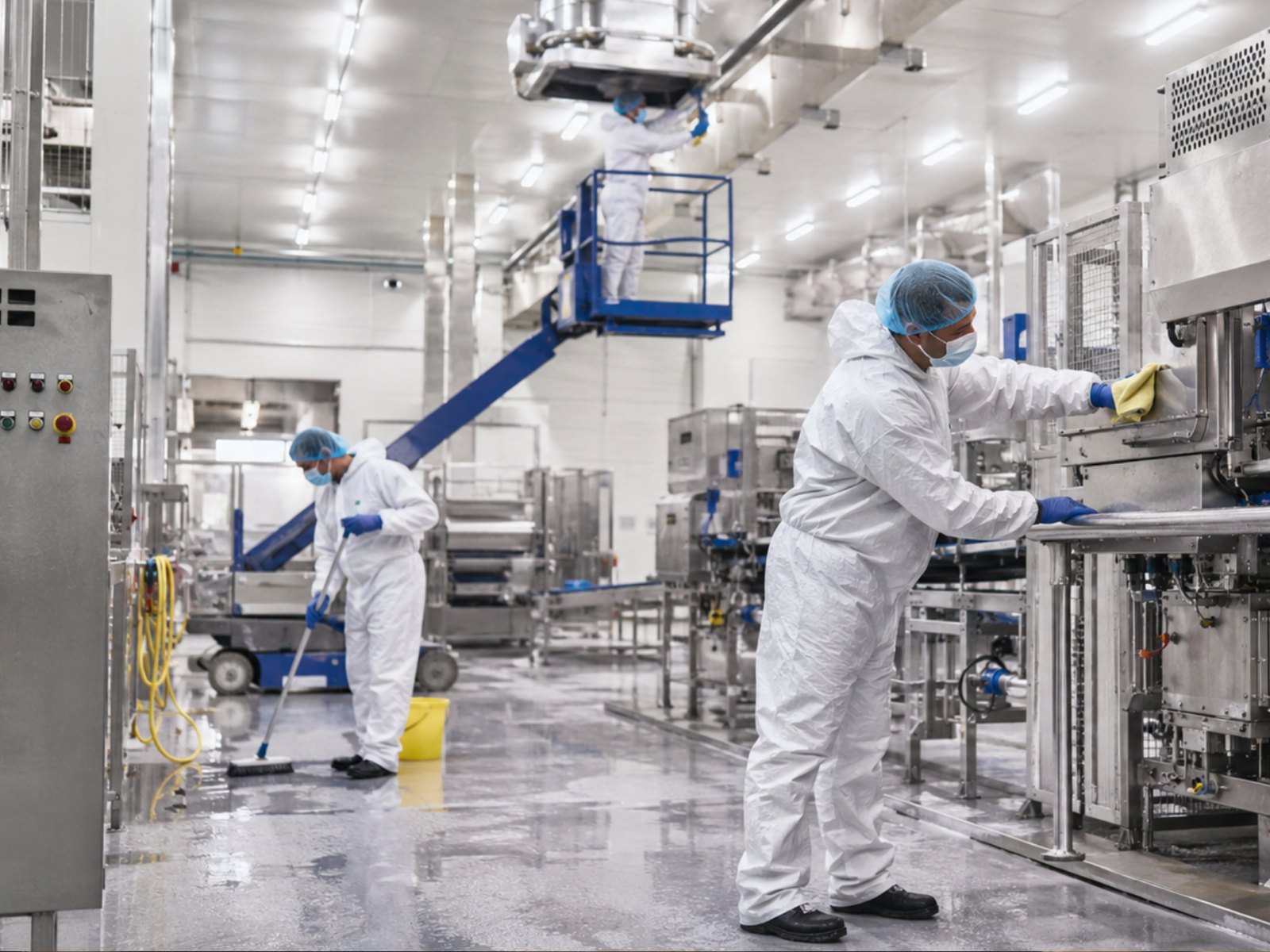
For many food factories, manufacturers and industrial sites, summer brings a short but valuable window to get important maintenance work done.
Production may slow down. Key lines may stop for planned maintenance. Access equipment can be brought in more safely. Engineers, facilities teams and cleaning specialists can work without constantly moving around live production.
That makes summer shutdown a good time to deal with the cleaning jobs that are difficult, disruptive or too easily pushed down the list during normal operations.
This is not just about making the site look tidy. It is about hygiene, safety, access, compliance records and keeping production environments in better condition for the months ahead.
“Shutdown periods are one of the best opportunities to get into the areas that are normally difficult to reach. If you plan it properly, you can deal with hygiene, dust, grease, ventilation and high-level cleaning in one controlled window.”
Liam Hodgson, Client Services Manager, BCS
Why shutdown cleaning needs planning
Specialist cleaning is often harder than it looks from the outside. In a live food production or industrial environment, there may be machinery, conveyors, racking, extraction systems, ducting, pipework, high-level beams, tanks, walkways, plant rooms and restricted-access areas. Some areas cannot be cleaned properly without isolations, permits, access platforms, trained operatives or coordination with engineering teams.
That is why shutdown cleaning should not be left until the last minute. A proper plan gives the site time to agree what needs cleaning, what equipment is required, where access is limited, what needs to be isolated and what evidence is needed afterwards.
For food manufacturers, this can also support the wider food safety management system. GOV.UK guidance states that food businesses must make and follow a system for managing food safety, and that cleaning is one of the key areas of good food hygiene practice. If a food business is not safe, it could receive a low hygiene rating, be closed or face prosecution.
The jobs that are easier during a shutdown
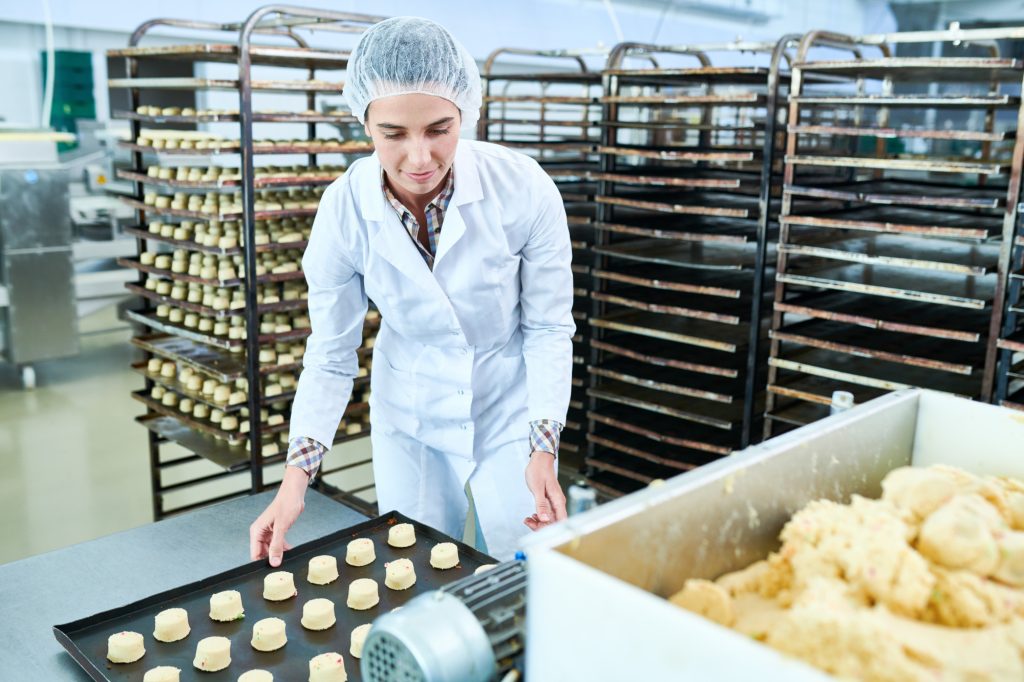
Some cleaning tasks can be completed during routine shifts. Others are far more effective when production is paused. Typical shutdown cleaning tasks can include:
- High-level cleaning of beams, ledges, pipework, lighting and structural steel
- Cleaning around machinery, conveyors, guards and production equipment
- Food manufacturing deep cleaning
- Factory and industrial cleaning
- LEV system cleaning and extraction cleaning
- HVAC deep cleaning and ventilation hygiene work
- Kitchen extraction cleaning where catering or production cooking is involved
- Cleaning of hard-to-access floors, walls, drains and service areas
- Removal of dust, grease, residue and build-up from difficult areas
These are the areas that can become problematic when they are missed repeatedly. Dust can settle above production. Grease and residue can build around extraction points. Ventilation systems can become harder to inspect. High-level areas can collect debris that is rarely seen during everyday checks.
In food production, even small cleaning gaps can become bigger operational concerns if they affect hygiene standards, pest risk, air quality, maintenance access or audit confidence.
High-level areas are often the hidden issue
High-level cleaning is a good example of why shutdown periods matter. From the factory floor, roof spaces and upper structures can look acceptable. But on closer inspection, beams, vents, light fittings, cable trays and pipework can hold dust and debris. These areas are often above normal cleaning height and may require specialist access equipment and trained teams.
If those areas are not included in the cleaning plan, they can be missed for months or years.
For facilities managers, the question is not simply “does the floor look clean?” It is “what is sitting above the production environment, and when was it last properly cleaned?”
LEV and ventilation cleaning should not be forgotten
Local exhaust ventilation, commonly known as LEV, is used to control dust, fumes, vapours and other airborne substances in the workplace. HSE guidance says LEV systems must be maintained in efficient working order so they continue to provide the necessary protection. It also states that LEV should have a thorough examination and test at least every 14 months, with records kept for at least five years.
Cleaning does not replace formal examination and testing, but it can support the overall condition and performance of the system. If ductwork, hoods, filters or associated areas are dirty, damaged, obstructed or poorly maintained, it can make the wider control system harder to manage.
Shutdown windows are a sensible time to inspect, clean and report on these systems because access is often easier and disruption is lower.
“The clean itself is only part of the value. The client also needs a clear record of what was done, what was found and whether anything needs follow-up. That evidence helps facilities teams plan properly.”
Liam Hodgson, Client Services Manager, BCS
Good reporting makes the work more useful
After a shutdown clean, the site should not be left guessing what has been completed.
Clear reporting gives operations, engineering, technical and facilities teams a useful record. It can help with audits, insurance queries, internal compliance checks, asset planning and future maintenance schedules.
A good post-clean report should show:
- Which areas were cleaned
- Before-and-after photographic evidence
- Any areas that could not be accessed
- Any defects, damage or concerns noticed during the clean
- Recommendations for future cleaning frequency
- Certification where relevant
This is especially important for multi-site operators and larger estates. If every site records cleaning differently, it becomes harder to compare risk, plan work and show that cleaning is being managed consistently.
BCS uses structured job reporting, including site photographs and detailed engineer notes, to help clients keep clearer records across planned and reactive cleaning work.
Summer shutdown is a chance to get ahead
The real value of shutdown cleaning is that it helps sites move from reactive cleaning to planned control.
Instead of waiting until an audit highlights an issue, a machine becomes difficult to access, a ventilation concern is raised or a high-level area becomes visibly dirty, shutdown cleaning gives the site a chance to act before the problem becomes urgent.
It can also reduce pressure on internal teams. Hygiene, facilities and engineering staff are often stretched during normal production. Bringing in a specialist cleaning team during a planned window allows internal staff to focus on their own roles while the more technical cleaning work is completed properly.
How BCS supports shutdown cleaning
Bay Cleaning Solutions supports food manufacturing, factory, industrial, hospitality, healthcare and commercial environments across the UK.
Our specialist cleaning services include food manufacturing cleaning, factory and industrial cleaning, high-level cleaning, HVAC deep cleaning, LEV system cleaning, kitchen deep cleaning, fire damper testing and TR19 kitchen extraction cleaning.
We work with clients to plan cleaning around production schedules, access requirements, shutdown windows and reporting needs.
If your site has a summer shutdown, planned maintenance period or quieter production window coming up, now is the time to review what needs cleaning, what needs evidence and what should not be left until the next audit.
Planning a summer shutdown clean?
Contact BCS to arrange specialist cleaning support for your factory, food production site or industrial environment.
Sources
- Food Standards Agency, food hygiene guidance for businesses.
- HSE, LEV FAQs
