
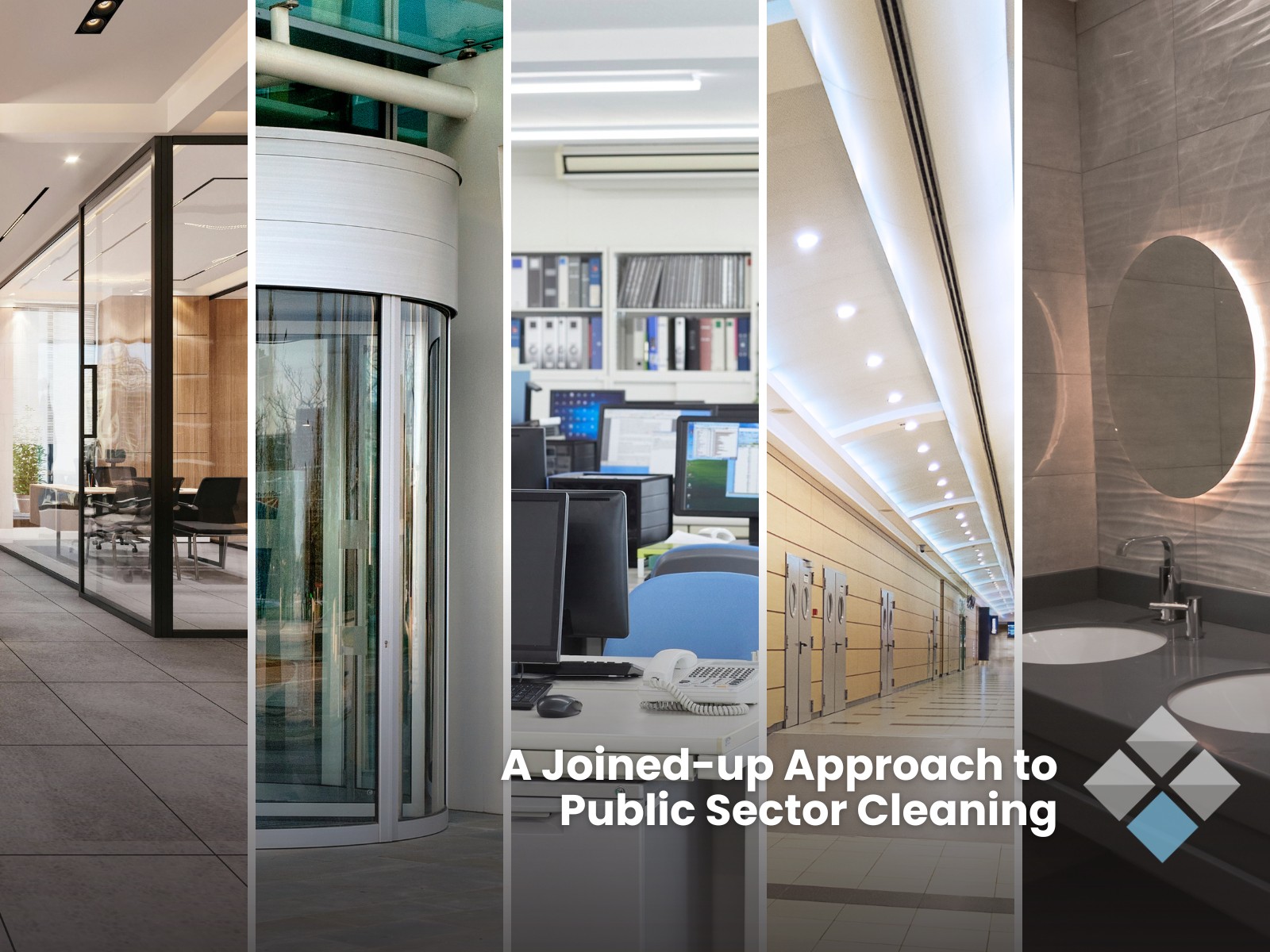
Public sector buildings are often described as “offices”, but in practice they are far more complex environments.
Within a single site, you can have public-facing reception areas, back-office workspaces, shared kitchens, washrooms, meeting rooms and, in some cases, spaces that sit close to clinical or high-risk use. Each area carries different expectations, different risks, and different standards of cleaning.
Treating them all the same is where problems begin.
At BCS, this is something we see regularly across public sector estates. What appears to be a straightforward office environment is often a mix of high-footfall public space, staff areas and critical building systems, all requiring different levels of attention.
Public sector estates are under constant pressure. Buildings are used heavily, often over long hours, and expectations around cleanliness and safety remain high. According to UK Government guidance on workplace health and safety, effective ventilation and clean working environments are key factors in reducing illness and maintaining safe occupancy levels in public buildings.
At the same time, facilities teams are expected to demonstrate that standards are being met, not just visually, but operationally. Cleaning is no longer just about appearance. It is about consistency, documentation and accountability.
One Estate, Multiple Environments
A council office, education building or administrative hub rarely operates as a single-purpose space.
Reception areas deal with constant footfall. Offices are occupied for long periods, often with limited airflow. Breakout areas and kitchens see repeated daily use. Washrooms experience peaks of demand. Each of these spaces requires a different cleaning approach, yet they are often managed under a single contract.
This is where a more structured view of cleaning becomes important. Not everything needs the same frequency, but everything needs the right level of attention.
Frontline Spaces Carry Higher Visibility
Public-facing areas are where standards are judged most quickly. Visitors form an impression within seconds. Floors, washrooms and surfaces need to be consistently maintained, often during live operating hours. Cleaning in these areas has to be visible enough to reassure, but controlled enough not to disrupt.
In public sector environments, this balance matters. Cleanliness becomes part of how the organisation is perceived.
Back-Office Areas Still Carry Risk
Less visible spaces are often where issues build up over time.
Dust accumulation on vents and high-level surfaces, poor air circulation and neglected shared spaces can all affect staff wellbeing. These are not always immediate problems, but they develop into longer-term concerns if left unmanaged.
Air quality, in particular, is becoming more prominent. Even in standard office areas, ventilation systems can circulate dust and contaminants if they are not periodically cleaned.
Specialist Areas Are Often Overlooked
In many public sector buildings, the biggest risks sit just outside the scope of standard cleaning routines.
Small kitchen areas are a common example. Even with light use, grease and residue build up over time. Extract systems, where present, are rarely included in general cleaning schedules, yet still carry hygiene and fire risk.
Ventilation systems are another. Ductwork and air handling units can go years without attention, quietly affecting air quality across the building.
Carpets also play a bigger role than many expect. In high-traffic environments, they absorb moisture, dirt and contaminants daily. Without periodic deep cleaning, this leads to odour, visible wear and a gradual decline in hygiene standards, particularly in entrances and shared areas.
There is also a growing shift towards preventative decontamination. Rather than waiting for issues to surface, facilities teams are introducing scheduled treatments to reduce bacteria and contaminants across high-use areas. This approach supports both hygiene and continuity, particularly in buildings with vulnerable users or high occupancy.
Fire dampers sit in the same category. Critical for safety, but often out of sight. Regular testing and cleaning are essential, yet they are rarely considered part of a standard cleaning scope.
Individually, these areas are easy to miss. Together, they form a significant part of the overall risk profile of a building.
The Challenge for Facilities Teams
Managing this complexity is not straightforward. Facilities teams are balancing multiple environments, limited budgets and increasing expectations. They are often coordinating different contractors, each responsible for a narrow scope, while still needing to demonstrate overall compliance across the building.
Consistency becomes difficult. Visibility becomes limited. And issues are often picked up reactively rather than prevented.
A More Joined-Up Approach
A more effective approach is to treat cleaning as part of the wider building strategy. That means aligning front-of-house cleaning with back-office maintenance, and linking both to ventilation, hygiene and compliance requirements. It also means having clear schedules, defined responsibilities and reporting that shows what has been done and when.
BCS operates with this kind of structure in mind, using coordinated teams and central reporting to support multi-site and complex environments across the UK .
Typical Cleaning Considerations Across Public Sector Spaces
| Area | Primary Risk | Typical Requirement | Often Overlooked Element |
|---|---|---|---|
| Reception / Public Areas | High footfall, perception | Daily cleaning, touchpoint focus | Carpet deep cleaning |
| Office Spaces | Air quality, dust build-up | Routine cleaning, periodic checks | Vent and high-level cleaning |
| Kitchens / Break Areas | Hygiene, grease | Regular surface cleaning | Extract and deep clean |
| Washrooms | Hygiene, peak usage | Frequent cleaning | Deep sanitation cycles |
| Plant / Ventilation Systems | Airborne contaminants | Inspection and maintenance | Full HVAC cleaning |
| Hidden Safety Systems | Fire risk | Scheduled compliance checks | Fire damper testing |
A Practical Perspective
“Public sector buildings are rarely simple environments. What looks like a standard office on the surface is often a mix of public access, staff space and critical infrastructure behind the scenes. The challenge is not just keeping it clean day to day, but understanding how each part of the building is used and what that means for hygiene, safety and compliance over time.” – Liam Hodgson, Client Services Manager, BCS
Public sector buildings are not single-purpose spaces, and cleaning them effectively requires more than a standard approach. It requires understanding how the building works, where the risks sit, and how each environment contributes to the whole. Clean is not one standard. It is a set of standards, applied properly in the right places.
