
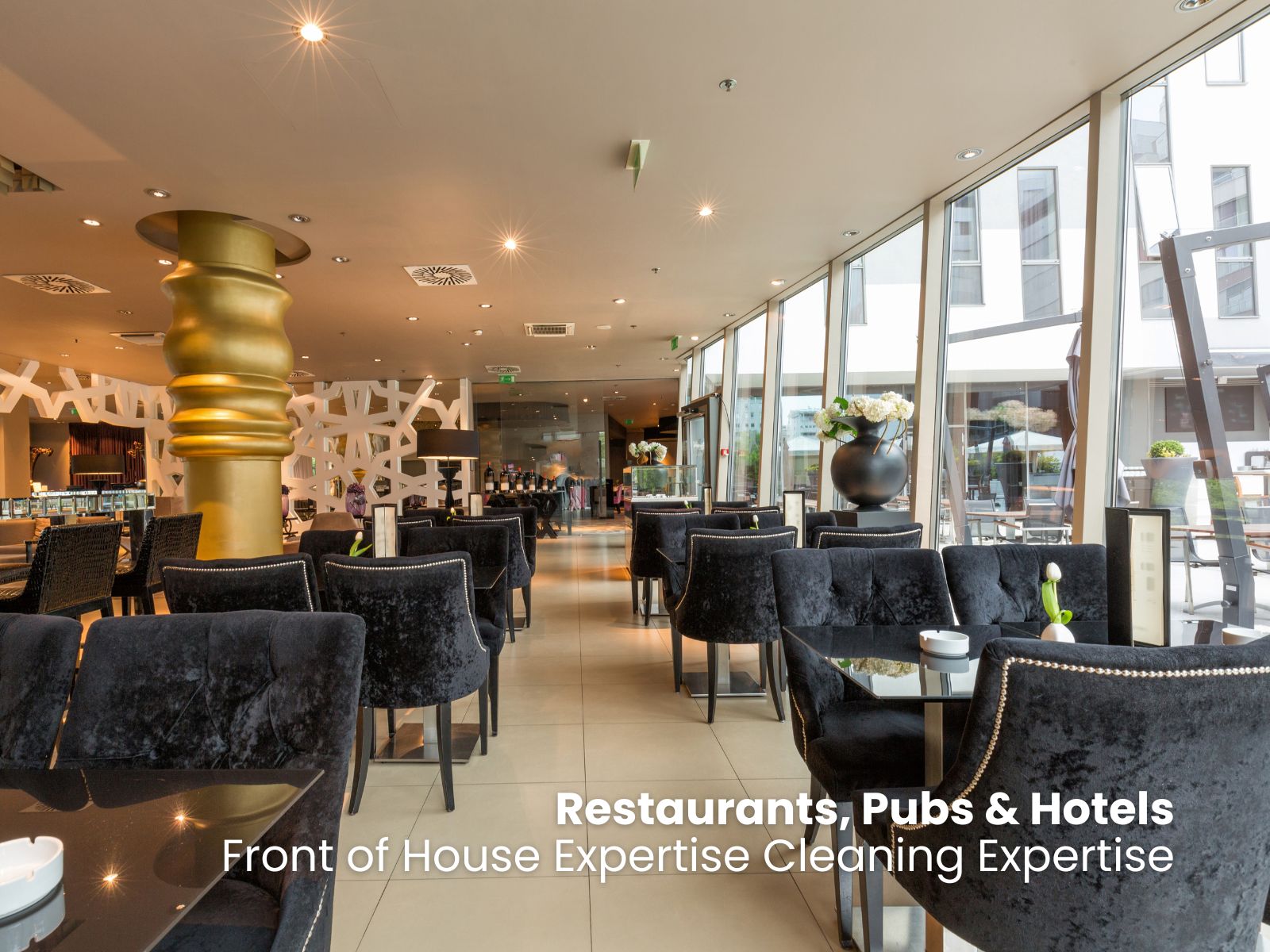
In many hospitality environments, cleaning is split into zones.
Front of house.
Kitchen & back of house.
Extraction.
High-level.
House keeping.
Technical cleans.
Different contractors. Different schedules. Different reports.
On paper, that can look organised. In reality, it often creates gaps.
A more resilient approach is to treat hygiene as one integrated programme. One structure. One reporting flow. One compliance view.
Why Separation Creates Blind Spots
Front of house might look presentable.
The kitchen might be deep cleaned quarterly.
Extraction might be serviced to TR19 standards.
But if these activities are not aligned, risk accumulates in the overlaps.
Grease-laden air moves between zones.
Dust migrates from high-level areas into dining spaces.
Kitchen deep cleans disturb residues that settle in shared ventilation routes.
A venue does not operate in compartments. Neither should its hygiene programme.
What a Structured Front of House Deep Clean Actually Involves
Specialist front of house cleaning is not a cosmetic polish. It is a methodical reset of customer-facing environments.
Below is a simplified framework used in structured programmes.
1. High-Level Areas
- Lighting fixtures and shades
- Decorative beams and ledges
- Ceiling diffusers and HVAC grilles
- Signage and display shelving
High-level contamination is one of the most overlooked issues in hospitality venues. Dust above diners undermines confidence immediately.
2. Fixtures, Joinery and Detailing
- Bar fronts and service counters
- Banquette bases and undersides
- Skirting boards and edges
- Window frames and door plates
- Full-frame glass detailing
This is where presentation meets durability. Small neglected areas age a venue quickly.
3. Upholstery and Soft Furnishings
- Fabric extraction
- Seam and crease detailing
- Spot treatment and stain management
- Odour neutralisation
Surface cleaning does not remove embedded contamination. Specialist extraction does.
4. Flooring
- Machine scrub and degrease
- Edge detailing
- Grout line cleaning
- Slip-risk assessment
Floor deterioration often starts at the edges and corners.
5. FOH-Adjacent Washrooms
- Vent grille cleaning
- Seal and grout detail
- Cubicle framework and hardware
Customer perception does not distinguish between zones. Standards must carry through.
Integrating with TR19 Extraction Cleaning
Extraction cleaning to TR19 standards focuses on grease removal and fire risk reduction within kitchen ventilation systems.
However, airflow does not respect departmental boundaries.
When extraction systems are heavily loaded, it can affect:
- Air movement in adjacent customer spaces
- Vent grille contamination
- Odour control
Aligning front of house cleaning schedules with extraction programmes creates operational efficiencies:
- Shared access windows
- Reduced repeat closures
- Unified reporting packs
- Clear compliance records
BCS deliver TR19-compliant extraction cleaning with detailed inspection, photographic evidence and certification. When this is integrated with FOH deep cleaning, estates teams gain a clearer hygiene picture across the entire site.
Aligning with Kitchen Deep Cleaning
Kitchen deep cleaning addresses grease, carbon deposits and contamination in food preparation areas.
If front of house deep cleaning is scheduled independently, you risk:
- Disjointed shutdowns
- Multiple access disruptions
- Separate reporting systems
- Increased overall cost
When aligned:
- One coordinated programme
- Reduced downtime
- Consistent standards across visible and non-visible areas
- Single structured report for audit purposes
This becomes particularly valuable for multi-site operators.
The Reporting Advantage
Integrated programmes allow for:
- Standardised scopes of work
- Before-and-after photography
- Compliance documentation
- Alignment with planned preventative maintenance schedules
BCS operate 28 dedicated teams nationwide, supported by a cloud-based management system that enables consistent scheduling, reporting and issue tracking across estates. UK-wide coverage without travel charges removes the typical regional variation challenge.
Mark Biffin explains the reasoning behind integration:
“When hygiene services are fragmented, nobody has a complete picture. You can have a compliant extraction system and still have declining standards in customer-facing areas. The stronger model is integration. One structured programme gives estates teams confidence that standards are consistent across the whole site, not just in isolated zones.”
One Hygiene Programme, Not Separate Tasks
Front of house cleaning protects brand perception.
Kitchen deep cleaning protects food safety.
TR19 extraction cleaning protects fire safety.
But they are interdependent.
Treating them as one coordinated hygiene programme removes blind spots, reduces disruption and strengthens compliance confidence.
For multi-site hospitality, food production and healthcare operators, integration is not about adding cost. It is about removing uncertainty.
If your current approach treats these services as separate line items, it may be worth reviewing whether alignment could deliver stronger operational control.
